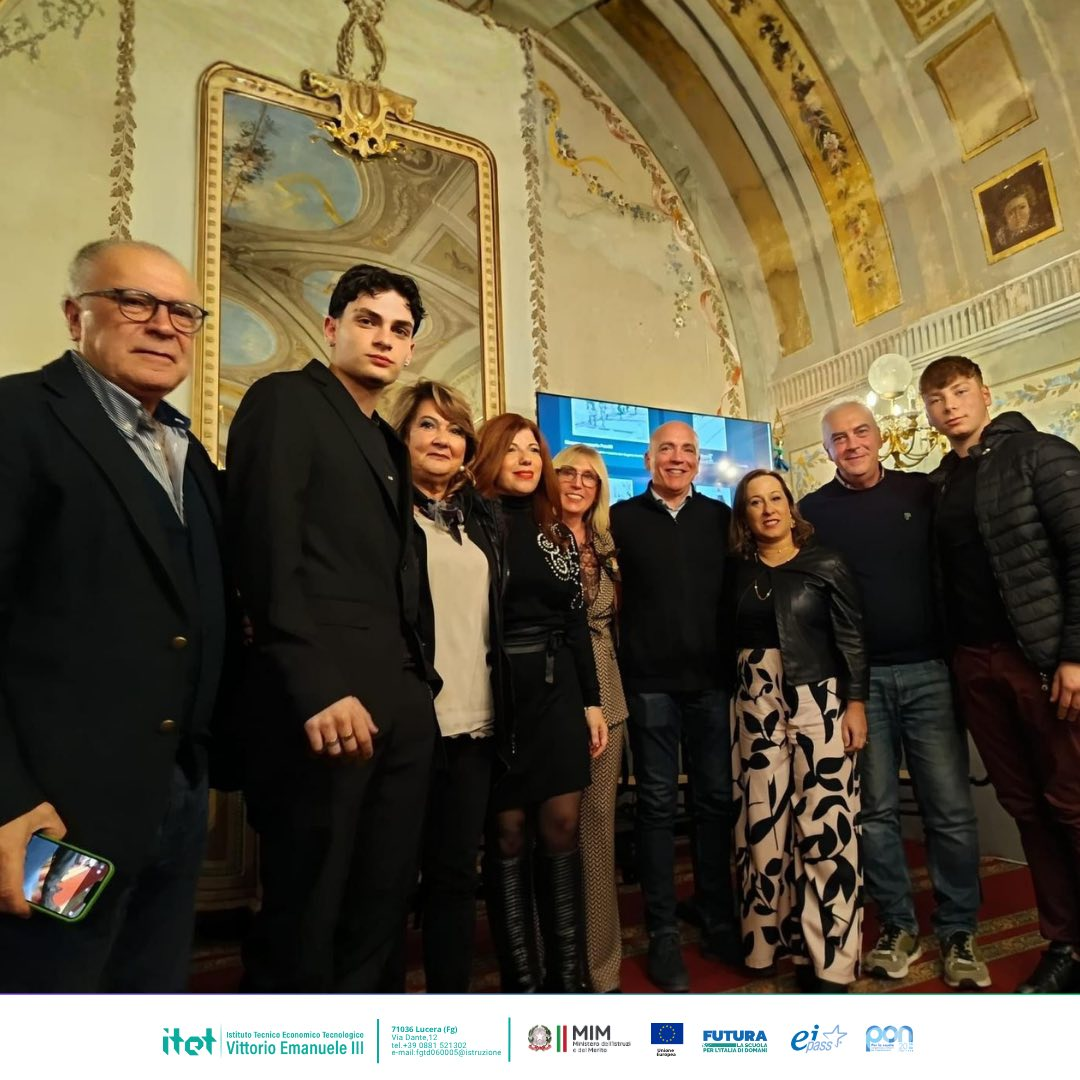

This week I celebrated the winner of the first edition of a grant in memory of my father. My brothers and I launched a prize of 1,000EUR for high school students. We delivered the first grant and started the process for next edition. Below is the speech I gave to congratulate the winner.
Good evening everyone, and thank you so much for being here.
A heartfelt thank-you to the Circolo Unione for hosting us, to Silvio Di Pasqua, tireless builder of relationships, to Aldo Apollo, Felicetta Di Iorio, and Tommaso Di Iorio, who generously dedicated their time to reviewing the projects submitted by Michele Corvelli and Christian Di Stasio.
My thanks as well to my friend Vincenzo Bizzarri for his support, to the City of Lucera, and to all the members of the Circolo Unione who are patiently waiting for the buffet.
And, of course, a special thank-you to the school community — to Principal Laura Flagella, Vice Principal Anna Maria Giannini, and Professor Di Battista — for believing in this initiative.
Tonight, together with my brothers Gianfranco and Roberto, we are proud to present the award to the winner of the first Surveyors’ Competition of Lucera, dedicated to our father, Antonio Maffulli.
My father knew that my work was rooted in technology. We often spoke about the future of work, about how so many things can now be automated — even in construction.
And he would always counter me with examples of things that can never be automated.
He used to say, “Try bringing concrete up the stairs of an old historic building — sometimes the only way is still with a basket on your shoulders.”
For us, this competition — aimed at high school students in their final years — is a way to reflect on something that concerns us all: the future of work, and the future of our children and grandchildren here in Italy.
Italy is an extraordinary country, rich in talent, creativity, and skill.
And yet, our productivity has been stagnant for over twenty years.
Economist Rosalia Greco of the Bank of Italy recently published a comparison of Italian productivity with that of Spain, Germany, and France — and the results are, frankly, discouraging.
Especially in the construction sector.
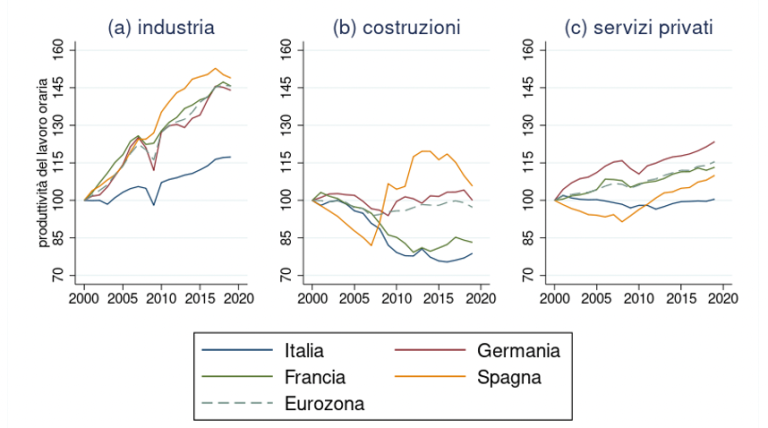
In plain terms: we work more, but produce less than others.
And not surprisingly, our wages are among the lowest in Europe — below Japan, the United States, and even Turkey — and only slightly above Poland, Malta, and Greece.
This trend paints a worrying picture of what could lie ahead.
But after nearly fifteen years living in California, I’ve learned to look at such data with optimism.
When I see those charts, I don’t see a crisis — I see enormous potential for improvement.
Technology is not what we lack; digital tools and artificial intelligence are already everywhere.
What we lack, I believe, is process innovation — the courage to rethink how we work and collaborate.
Maybe that hesitation comes from too many regulations, or maybe those regulations are themselves the result of a cultural aversion to risk.
Whatever the reason, one thing is certain: Italy is not changing fast enough.
And that’s where this profession — and these young people — come in.
My father, Mastro Antonio, used to repeat a simple truth:
“Nothing replaces experience.”
Without knowing it, he was echoing Taiichi Ohno, the father of the Toyota Production System, whose methods after World War II helped Japan achieve one of the greatest productivity leaps in modern history.
Ohno taught that everything can — and must — change continuously in pursuit of perfection.
At Toyota, new workers spend their first week simply observing the production line. Then, at the end of that week, they’re asked one question:
“What would you change to make it more efficient?”
In the same way, newly trained surveyors, with their technical skills and understanding of the territory, can begin right away to offer practical, concrete ideas.
They can start as apprentices — observers of today’s methods — and within months, already become contributors to improvement.
I’m convinced that in our technical schools, and among the surveyors of Lucera, we already have the people who can lead the cultural transformation Italy so urgently needs — not in ten years, but right now.
The laws that define this profession assign surveyors clear and vital responsibilities: surveying, design, site supervision, valuation, and territorial protection.
These are tasks that cannot be delegated to algorithms or bureaucratic “machines” that keep doing things the same way simply because “that’s how it’s always been done.”
They require professionals with education, hands-on experience, and a deep sense of civic responsibility.
That’s why these young people have a double opportunity.
First, their work as surveyors can never be fully automated — it requires judgment, interpretation, and accountability.
And second, they can start making a difference immediately — observing, learning, and proposing improvements — without waiting years in outdated academic systems.
In the coming years, professionals like them will be the vanguard of the new world of work — able to combine digital innovation and artificial intelligence with practical wisdom, regulatory understanding, and a deep connection to their territory.
And through that combination, they can drive the change our country so badly needs.
Because the future of work will not be built by smart machines alone, but by capable and responsible people.
And among them, the surveyors of Lucera will — and must — be on the front line.
Congratulations to all the participants in this competition.
With your ideas, your vision, and your enthusiasm, you’re proving that the future is built one step at a time — just like the strongest, most enduring constructions.
And to the teachers and school leaders: these students carry backpacks full of dreams, and you have the wonderful privilege of helping them make those dreams real.
Best wishes to all of you — and know that the Maffulli family will proudly support the 2026 edition of this competition dedicated to Antonio Maffulli.
You must be logged in to post a comment.